AI's Construction Boom: Smarter Project Management for a Stronger Future
AI is transforming construction project management by predicting delays, optimizing schedules, and enhancing safety. By leveraging AI, construction companies can improve project outcomes and gain a competitive edge.
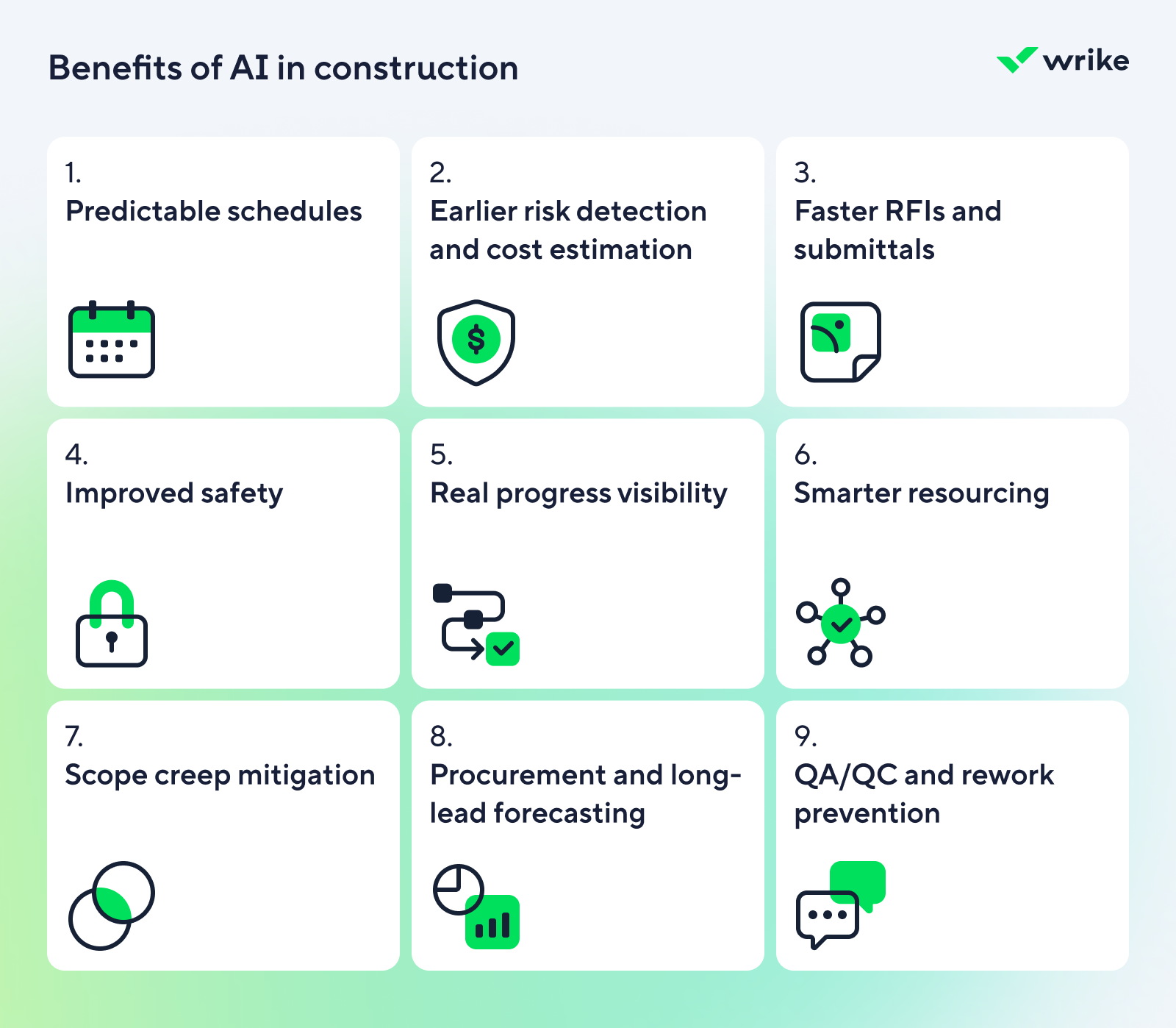
Construction projects are the building blocks of progress; when they falter, the repercussions ripple throughout communities and economies. Delays, budget overruns, and rework plague the industry, exacerbated by labor shortages, fluctuating material costs, and inconsistent project management practices.
The AI Revolution on Construction Sites
Artificial intelligence (AI) is emerging as a powerful ally in modern construction, not to replace human workers, but to augment their capabilities and streamline processes. By analyzing vast datasets, AI can predict potential delays, identify risks early on, and optimize schedules, enabling construction teams to make informed decisions proactively. This shift towards data-driven decision-making is crucial in an industry where projects frequently exceed timelines and budgets.
Key Benefits of AI in Construction Project Management
- Enhanced Safety: AI-powered wearables, drones, and real-time monitoring systems can identify hazards and ensure compliance with safety regulations, reducing the risk of accidents and injuries.
- Improved Communication: AI facilitates seamless communication between stakeholders by providing a centralized platform for sharing information, tracking progress, and resolving issues.
- Predictable Schedules: AI algorithms analyze historical data and current project conditions to generate accurate schedules and identify potential bottlenecks, enabling teams to proactively mitigate delays.
- Early Risk Detection: AI can detect subtle patterns and anomalies in project data that may indicate emerging risks, allowing teams to address them before they escalate into major problems.
Specific Applications of AI in Construction
AI's potential in construction is broad. Here are some examples:
- Predictive Maintenance: AI algorithms analyze sensor data from construction equipment to predict when maintenance is required, preventing costly breakdowns and downtime.
- Automated Progress Tracking: Drones equipped with AI-powered image recognition software can monitor construction progress in real-time, providing accurate updates and identifying deviations from the plan.
- Optimized Resource Allocation: AI can analyze project requirements and resource availability to optimize the allocation of labor, equipment, and materials, minimizing waste and maximizing efficiency.
- AI-Powered Design: AI algorithms can generate design options based on project specifications and constraints, helping architects and engineers explore innovative solutions and optimize building performance.
- Virtual Assistants for Construction Workers: AI-powered virtual assistants can provide construction workers with real-time information, guidance, and support, improving their productivity and safety.
The Future of Construction with AI
AI is not just a futuristic concept; it is a practical tool that is already transforming the construction industry. By embracing AI-powered solutions, construction companies can improve project outcomes, enhance safety, and gain a competitive edge. As AI technology continues to evolve, its role in construction will only become more prominent, driving innovation and efficiency across the entire sector.
For construction professionals seeking to optimize their project management processes, exploring AI-driven platforms is a crucial step. Solutions like Wrike offer features that can help teams leverage the power of AI for better planning, execution, and risk management.
The integration of AI in construction represents a paradigm shift, moving the industry towards a more data-driven and efficient future. By embracing these technologies, construction companies can build a stronger, more resilient, and more sustainable future for themselves and the communities they serve.
Related Tools
Related Articles
Beyond Policy: How Wrike's 'Women of Wrike' Initiative Empowers Female Professionals
Wrike's 'Women of Wrike' (WoW) initiative is an employee-led program empowering female professionals through mentorship, workshops, and networking. WoW addresses challenges women face in career advancement, fostering a supportive environment and promoting equity within the company.
Bridging the Gap: Integrating Construction Project Management with QuickBooks for Financial Harmony
Integrating project management software with QuickBooks streamlines financial workflows, reduces errors, and enhances communication for construction teams. Key features to consider include job-level tracking, progress invoicing, and time-based labor cost allocation.
Wrike Streamlines Franchise Onboarding for Buzz Franchise Brands, Boosting Efficiency
Buzz Franchise Brands streamlined its franchise onboarding process using Wrike, transforming a fragmented, multi-platform system into efficient, centralized workflows. This resulted in significant time savings, improved task tracking, and enhanced visibility across teams, enabling the company to scale its franchise operations more effectively.