Scaling Project Management: 7 Enterprise-Ready Platforms for 2026
Enterprises require project management software capable of handling large projects, multiple teams, and complex operations. This article highlights seven platforms designed to meet these demands, focusing on scalability, security, and cross-departmental collaboration.
Selecting the right project management software is a critical decision for any organization, but the stakes are significantly higher for enterprises. Unlike smaller businesses, enterprises require platforms capable of coordinating vast projects across multiple teams, maintaining alignment across departments, and handling the inherent complexities of large-scale operations. Generic project management tools often fall short, lacking the robust security features, cross-departmental visibility, resource management capabilities, and workload capacity needed to support enterprise-level demands.
This article cuts through the noise to highlight seven project management platforms specifically designed to meet the rigorous demands of enterprise environments. We'll explore their strengths, weaknesses, and key features to help you make an informed decision for your organization's future.
What to Look for in Enterprise Project Management Software
Before diving into specific platforms, it's essential to understand the core requirements of enterprise project management software. Consider these key factors:
- Scalability: The platform must be able to accommodate growing project volume, expanding teams, and evolving requirements without sacrificing performance.
- Cross-Departmental Collaboration: Seamless integration and communication across different departments is crucial for maintaining alignment and avoiding silos.
- Visibility and Reporting: Leaders need clear, real-time visibility into project progress, resource allocation, and potential roadblocks. Robust reporting capabilities are essential for data-driven decision-making.
- Security and Governance: Enterprise-grade security features, including data encryption, access controls, and compliance certifications (e.g., GDPR, CCPA, HIPAA), are non-negotiable.
- Workflow Automation: Automating repetitive tasks and streamlining workflows can significantly improve efficiency and reduce errors.
- Integration Capabilities: The platform should integrate seamlessly with existing enterprise systems, such as CRM, ERP, and communication tools.
- Customization: The ability to customize the platform to fit specific business processes and workflows is essential for maximizing its value.
Top 7 Enterprise Project Management Platforms
Here are seven leading project management platforms that are well-suited for enterprise environments:
1. Wrike
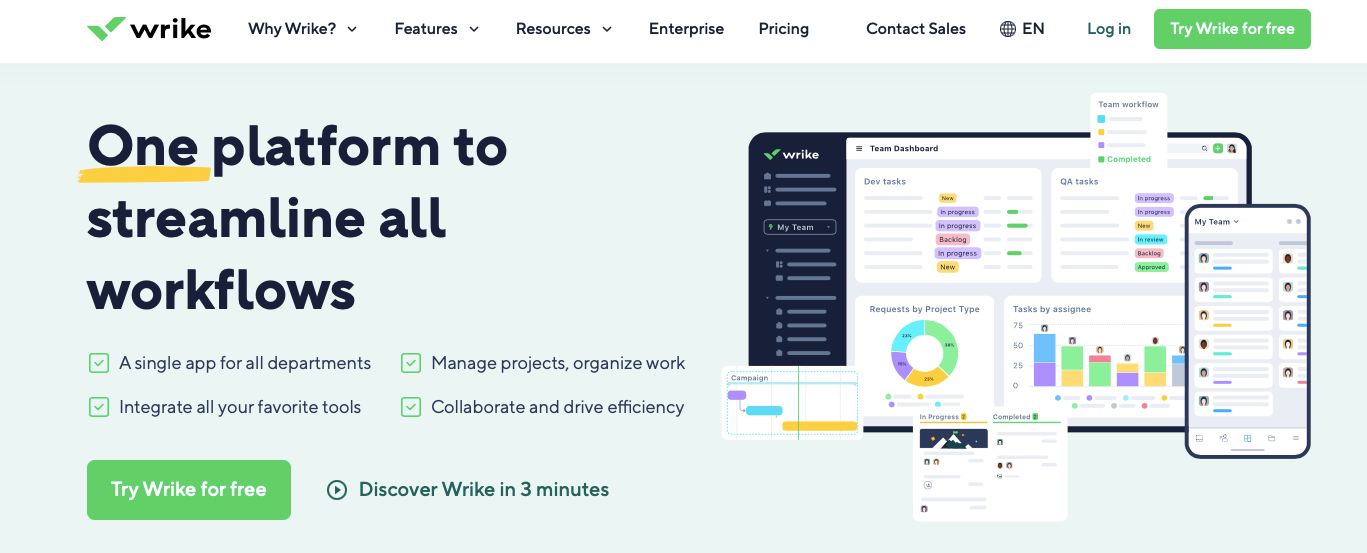
Wrike is a powerful and versatile platform known for its ability to handle high-volume workloads and unify teams under a shared system. Its strengths lie in its robust workflow automation capabilities, customizable dashboards, and enterprise-grade security features. Companies like Walmart and Siemens rely on Wrike to support strategic planning and maintain oversight across complex projects. Wrike also offers integrations with various business tools, enhancing its functionality within an enterprise ecosystem.
2. Smartsheet
Smartsheet combines the familiar interface of a spreadsheet with powerful project management features. This makes it a popular choice for organizations that need a flexible and collaborative platform. Smartsheet excels at resource management, budget tracking, and real-time reporting. It's particularly well-suited for managing data-driven projects and automating workflows. Its scalability and integration capabilities make it a strong contender for enterprise adoption.
3. Adobe Workfront
4. ClickUp
ClickUp is a highly customizable and feature-rich platform that caters to a wide range of industries and project types. Its flexibility and affordability make it an attractive option for enterprises looking to consolidate multiple project management tools into a single platform. ClickUp offers a wide array of features, including task management, time tracking, goal setting, and reporting. Its intuitive interface and extensive customization options make it easy to adapt to specific business needs.
5. Microsoft Project
Microsoft Project has been a mainstay in the project management world for decades. Its integration with the Microsoft ecosystem and its robust scheduling capabilities make it a popular choice for enterprises that rely heavily on Microsoft products. Microsoft Project offers comprehensive features for project planning, resource allocation, and progress tracking. While its interface can be somewhat complex, its familiarity and integration with other Microsoft tools make it a viable option for many organizations.
6. Asana
Asana is a user-friendly and collaborative platform that focuses on task management and team communication. Its strengths lie in its intuitive interface, its ability to streamline workflows, and its integrations with other popular business applications. Asana is particularly well-suited for managing smaller to medium-sized projects and fostering collaboration among distributed teams. Its ease of use and affordability make it an attractive option for enterprises looking to improve team productivity.
7. Teamwork
Teamwork is a project management platform designed for client-facing businesses. It offers features for project planning, task management, time tracking, and client communication. Teamwork's strengths lie in its ability to streamline client interactions, manage billable hours, and track project profitability. It's particularly well-suited for agencies, consulting firms, and other organizations that provide services to external clients.
Making the Right Choice
Choosing the right enterprise project management software is a complex decision that requires careful consideration of your organization's specific needs and requirements. Before making a decision, it's essential to:
- Assess your organization's needs: Identify your key pain points, challenges, and requirements.
- Define your budget: Determine how much you're willing to spend on project management software.
- Evaluate different platforms: Compare the features, pricing, and user reviews of different platforms.
- Request demos and trials: Get hands-on experience with the platforms you're considering.
- Consider your existing infrastructure: Ensure that the platform integrates seamlessly with your existing systems.
- Involve stakeholders: Get input from all key stakeholders, including project managers, team members, and IT professionals.
By following these steps, you can increase your chances of selecting a project management platform that will help your organization achieve its goals.
Related Tools
Related Articles
Beyond Policy: How Wrike's 'Women of Wrike' Initiative Empowers Female Professionals
Wrike's 'Women of Wrike' (WoW) initiative is an employee-led program empowering female professionals through mentorship, workshops, and networking. WoW addresses challenges women face in career advancement, fostering a supportive environment and promoting equity within the company.
Bridging the Gap: Integrating Construction Project Management with QuickBooks for Financial Harmony
Integrating project management software with QuickBooks streamlines financial workflows, reduces errors, and enhances communication for construction teams. Key features to consider include job-level tracking, progress invoicing, and time-based labor cost allocation.
Wrike Streamlines Franchise Onboarding for Buzz Franchise Brands, Boosting Efficiency
Buzz Franchise Brands streamlined its franchise onboarding process using Wrike, transforming a fragmented, multi-platform system into efficient, centralized workflows. This resulted in significant time savings, improved task tracking, and enhanced visibility across teams, enabling the company to scale its franchise operations more effectively.