Streamlining Marketing Campaigns: A Guide to Efficient Execution
Effective campaign management requires coordinating people, timelines, and approvals. Learn how to streamline your marketing operations with a structured approach to intake, planning, execution, reporting, and optimization.
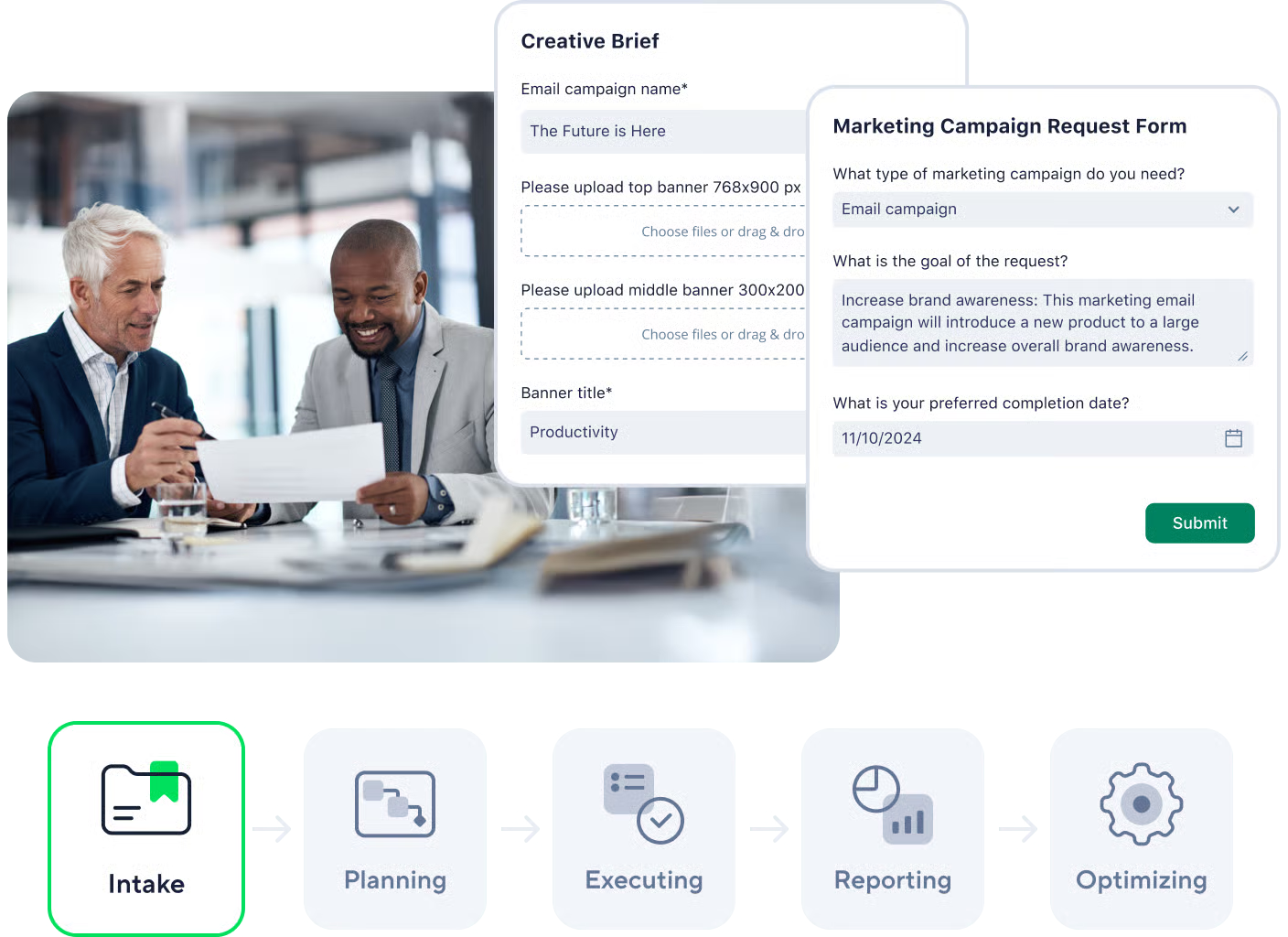
Marketing campaigns often hinge on a solid strategy, compelling creative assets, and well-chosen channels. However, even the most brilliant strategies can crumble due to operational inefficiencies. A late product launch, delayed approvals, and scattered feedback are symptoms of a deeper problem: a lack of structured campaign management.
Many marketing teams find themselves repeating the same chaotic processes campaign after campaign. Scrambling to define scope, juggling tasks across various platforms like Slack, Notion, and spreadsheets, and constantly chasing approvals becomes the norm. This reactive approach not only wastes time and resources but also hinders overall campaign effectiveness.
The Five Stages of Effective Campaign Management
Effective campaign management provides the operational framework needed to coordinate people, timelines, assets, and approvals across the entire campaign lifecycle. This lifecycle can be broken down into five key stages:
1. Intake: Capturing and Prioritizing Requests
The intake stage is where work enters the system. A disorganized intake process can lead to confusion, missed deadlines, and duplicated efforts. Implementing a standardized request form or process ensures that all necessary information is captured upfront, allowing for proper prioritization and resource allocation. Look for project management software that streamlines this process by allowing for the creation of custom request forms with required fields.
2. Planning: Defining Scope, Timeline, and Resources
The planning stage involves defining the scope of the campaign, establishing a realistic timeline, and allocating the necessary resources. A well-defined plan serves as a roadmap, ensuring that everyone is aligned on the goals, objectives, and deliverables. Visual timelines, such as Gantt charts, can be particularly helpful in visualizing the project schedule and identifying potential bottlenecks. Tools like Wrike or monday-com excel in this area.
3. Execution: Managing Workflows and Approvals
The execution stage is where the actual work takes place. This involves managing workflows, tracking progress, and obtaining necessary approvals. Streamlining workflows through automation can significantly reduce manual effort and improve efficiency. Proofing tools facilitate the review and approval process, ensuring that all stakeholders have the opportunity to provide feedback. The ability to manage version control and track changes is also crucial during this stage. Consider tools with robust automation capabilities such as ClickUp or Asana to manage these workflows.
4. Reporting: Tracking Performance and Providing Visibility
The reporting stage involves tracking campaign performance and providing real-time visibility into key metrics. Dashboards provide a centralized view of campaign progress, allowing stakeholders to quickly assess performance and identify areas for improvement. Integrations with analytics platforms and other marketing tools are essential for gathering comprehensive data. Look for project management software that offers customizable dashboards and reporting features.
5. Optimization: Refining Processes and Templates
The optimization stage is where lessons are learned and processes are refined for future campaigns. Conducting retrospectives after each campaign allows the team to identify what worked well and what could be improved. Updating templates based on these insights ensures that best practices are incorporated into subsequent campaigns. Small refinements can compound over time, leading to significant improvements in efficiency and effectiveness. Using tools such as Notion to document and share lessons learned is a great way to refine the process.
Choosing the Right Campaign Management Tools
Selecting the right campaign management tools is crucial for success. While features like request forms, visual timelines, proofing tools, and dashboards are generally essential, it's important to choose tools that align with your specific needs and address the pain points in your current campaign management process. Don't get bogged down in generic feature checklists; instead, focus on capabilities that will directly improve your team's efficiency and effectiveness. Integration with your existing tech stack is also a key consideration.
Continuous Improvement Through Optimization
Campaign management is not a one-time fix but rather an ongoing process of optimization. By deliberately refining your campaign processes, conducting regular retrospectives, and updating your templates, you can continuously improve your team's performance. Even small improvements can have a significant impact over time. For example, saving just 30 minutes per campaign can translate to 50 hours of saved time over the course of a year.
By focusing on structured campaign management, marketing teams can move beyond reactive fire drills and create a more efficient, effective, and ultimately successful approach to launching and managing marketing initiatives. This allows for more time spent on strategy and creative execution, leading to better results and increased ROI.
Related Tools
Related Articles
Beyond Policy: How Wrike's 'Women of Wrike' Initiative Empowers Female Professionals
Wrike's 'Women of Wrike' (WoW) initiative is an employee-led program empowering female professionals through mentorship, workshops, and networking. WoW addresses challenges women face in career advancement, fostering a supportive environment and promoting equity within the company.
Bridging the Gap: Integrating Construction Project Management with QuickBooks for Financial Harmony
Integrating project management software with QuickBooks streamlines financial workflows, reduces errors, and enhances communication for construction teams. Key features to consider include job-level tracking, progress invoicing, and time-based labor cost allocation.
Wrike Streamlines Franchise Onboarding for Buzz Franchise Brands, Boosting Efficiency
Buzz Franchise Brands streamlined its franchise onboarding process using Wrike, transforming a fragmented, multi-platform system into efficient, centralized workflows. This resulted in significant time savings, improved task tracking, and enhanced visibility across teams, enabling the company to scale its franchise operations more effectively.