Beyond the Buzz: AI Set to Revolutionize Workflow Integration in 2026
Experts predict that 2026 will be the year AI finally delivers on its promise, transforming from disparate tools into a cohesive ecosystem that streamlines complex business processes. Employees are eager to leverage the power of AI, but they need tools that work together.
AI's Next Act: From Buzzword to Workflow Backbone
For years, artificial intelligence has been touted as the future of productivity. However, many businesses are finding that current AI implementations fall short, often existing as isolated tools that don't integrate well with existing workflows. The result? A surprisingly low return on investment for many AI initiatives. Experts predict that 2026 will be the year AI finally delivers on its promise, transforming from a collection of disparate tools into a cohesive ecosystem that streamlines complex business processes.
The Problem with Siloed AI
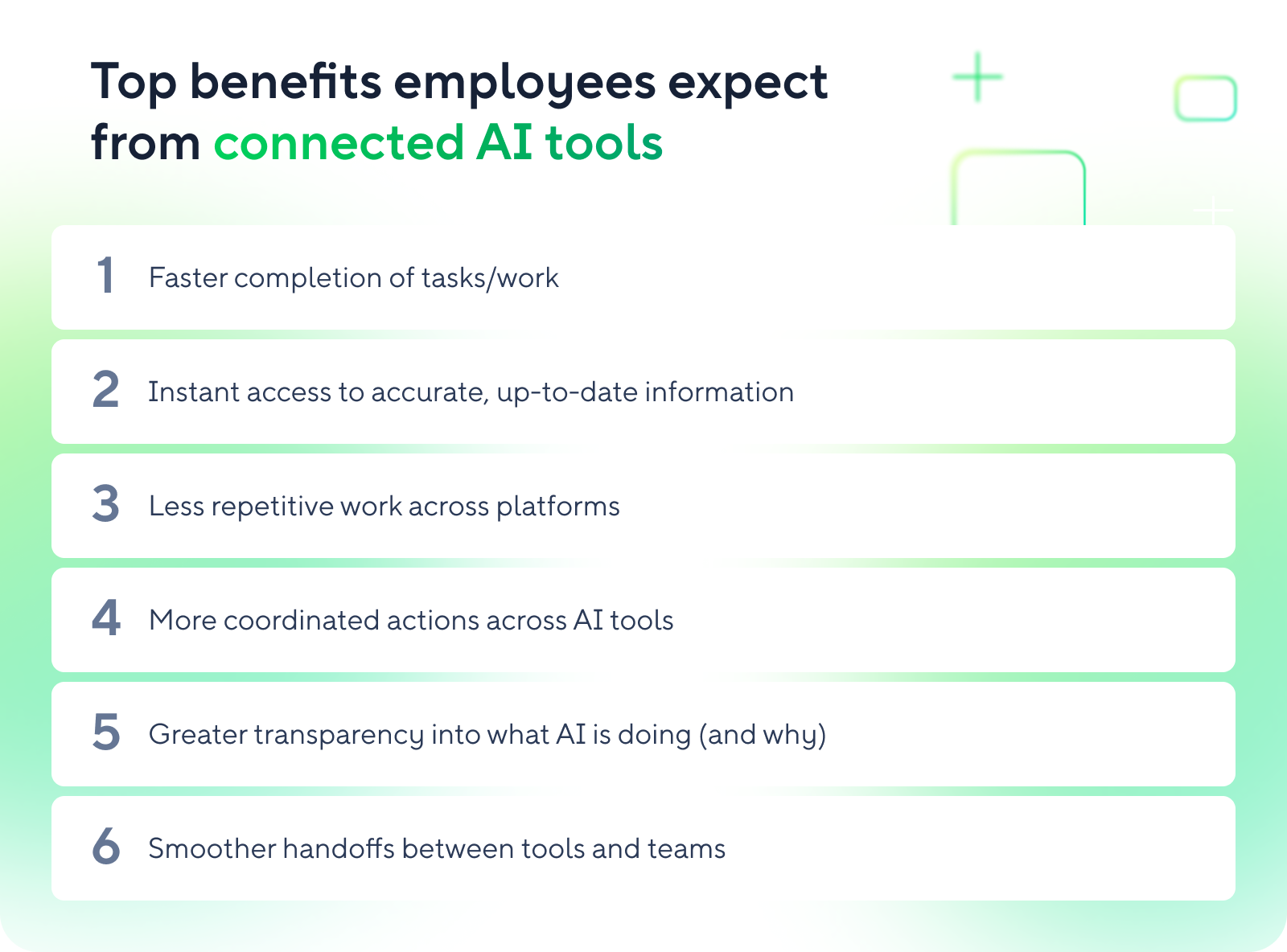
The current landscape of AI tools is fragmented. Many AI solutions are designed for a single purpose, lacking the ability to share context or integrate with other systems. This creates data silos and hinders collaboration, ultimately limiting the potential benefits of AI. Recent research highlights this issue, revealing that a significant percentage of employees desire AI tools that can seamlessly connect across platforms, improving overall efficiency and teamwork.
Employees Demand Integrated AI
Employees are eager to leverage the power of AI, but they need tools that work together. They want AI solutions that can understand the context of their work, share information across different applications, and automate tasks that span multiple departments. In essence, they're looking for an AI-powered ecosystem that enhances their existing workflows, rather than adding more complexity.
The Future of Workflow is Connected
The key to unlocking the true potential of AI lies in integration. The next generation of AI tools will focus on connecting disparate data systems, embedding AI agents into existing workflows, and providing contextual intelligence to support better decision-making. This connected approach will enable businesses to automate complex processes, improve collaboration, and gain valuable insights from their data.
Wrike's Approach to AI-Powered Workflows
Companies like Jellyfish and Walmart Canada have already experienced the benefits of integrated AI solutions. By deploying platforms like Wrike, these organizations have been able to connect diverse data systems, embed AI agents into their workflows, and provide contextual intelligence to their teams. The results have been significant, including substantial time savings and improved operational efficiency.
Wrike, for example, aims to connect data systems, embed AI agents into workflows, and provide contextual intelligence for enhanced decision-making.
The Path Forward: Embracing Integrated AI
As we move into 2026, businesses must prioritize integration when evaluating AI solutions. Instead of focusing on individual tools, they should seek out platforms that can connect their data, automate their workflows, and empower their employees with contextual intelligence. By embracing this connected approach, organizations can finally unlock the true potential of AI and drive significant improvements in productivity and efficiency.
The shift towards integrated AI represents a fundamental change in how businesses approach automation and workflow management. By breaking down data silos and fostering collaboration, companies can create a more efficient, agile, and intelligent organization. For professionals seeking to optimize their software investments, the focus should be on platforms that offer a cohesive, AI-powered ecosystem capable of transforming complex workflows from start to finish.
Key Considerations for Choosing an AI-Powered Workflow Solution:
- Integration Capabilities: Does the solution seamlessly connect with your existing tools and data systems?
- Contextual Intelligence: Does the AI provide relevant insights and recommendations based on the context of your work?
- Workflow Automation: Can the AI automate tasks that span multiple departments and systems?
- Collaboration Features: Does the solution facilitate collaboration and knowledge sharing among team members?
- Measurable ROI: Can the solution demonstrate a clear return on investment through improved productivity and efficiency?
By carefully considering these factors, businesses can make informed decisions about their AI investments and ensure that they're on track to achieve their desired outcomes. The future of workflow is connected, and those who embrace this approach will be best positioned to thrive in the years ahead.
Related Tools
Related Articles
Beyond Policy: How Wrike's 'Women of Wrike' Initiative Empowers Female Professionals
Wrike's 'Women of Wrike' (WoW) initiative is an employee-led program empowering female professionals through mentorship, workshops, and networking. WoW addresses challenges women face in career advancement, fostering a supportive environment and promoting equity within the company.
Bridging the Gap: Integrating Construction Project Management with QuickBooks for Financial Harmony
Integrating project management software with QuickBooks streamlines financial workflows, reduces errors, and enhances communication for construction teams. Key features to consider include job-level tracking, progress invoicing, and time-based labor cost allocation.
Wrike Streamlines Franchise Onboarding for Buzz Franchise Brands, Boosting Efficiency
Buzz Franchise Brands streamlined its franchise onboarding process using Wrike, transforming a fragmented, multi-platform system into efficient, centralized workflows. This resulted in significant time savings, improved task tracking, and enhanced visibility across teams, enabling the company to scale its franchise operations more effectively.